mobile plan
In a world where connectivity defines how we work, socialize, and even relax, choosing the right mobile plans has become more important than ever. With hundreds of options advertised daily — each with its own perks, fine print, data limits, and hidden fees — it’s no surprise that many people get overwhelmed when deciding which plan fits their needs.
This article will walk you through the essentials of selecting the ideal mobile plan, whether you’re a light user who just checks emails or a data-heavy streamer, an international traveler, or someone focused on saving money without sacrificing service.
1. Why Choosing the Right Mobile Plan Matters
Your mobile plan isn’t just a monthly bill — it shapes how you connect with the world. A plan that’s too limited might leave you frustrated with throttled speeds or overage charges, while a plan that’s far more than you need means wasted money. On the other hand, a plan that fits your habits can offer comfort, convenience, and even significant savings.
Here’s why picking the right mobile plan matters:
-
✔ Cost efficiency: Avoid paying for data, features, or services you don’t use.
-
✔ Better experience: Get network speeds and coverage that match your lifestyle.
-
✔ Less stress: No surprise bills or throttling mid-month.
-
✔ Customization: Plans now come with options tailored for families, travelers, gamers, and more.
2. Assessing Your Needs Before You Compare Plans
Before browsing mobile plans, ask yourself a few key questions:
a. How Much Data Do You Use?
Data usage is probably the biggest factor in plan selection. Ask yourself:
-
Do you stream music or videos frequently?
-
Do you use social media daily?
-
Do you browse the internet or check email on the go?
-
Do you mostly connect to Wi-Fi?
If you mostly use Wi-Fi and rarely stream videos on mobile data, a low-data plan might be enough. But if you stream HD videos or play online games regularly, you might need a high-data or unlimited plan.
A rough guideline:
| User Type | Typical Data Needs |
|---|---|
| Light user (email, minimal browsing) | 1–3 GB |
| Moderate user (social media, some streaming) | 5–10 GB |
| Heavy user (HD streaming, gaming, frequent downloads) | 15 GB+ or unlimited |
b. Do You Need Unlimited Data?
Unlimited plans sound great — and for many people, they’re worth it — but they’re usually more expensive. Consider:
-
Do you consistently use large amounts of data?
-
Are you often outside Wi-Fi zones?
-
Do you work remotely or travel frequently?
If the answer is yes, unlimited might save you from expensive overages. But if you rarely exceed 10 GB per month, a limited plan might be more budget-friendly.
c. How Important Is Call and Text Quality?
Many mobile plans today focus heavily on data, but you shouldn’t ignore voice calls and messaging:
-
Do you place many phone calls?
-
Do you send international texts?
-
Do you need features like voicemail, call forwarding, or unlimited minutes?
Most plans today include unlimited domestic calls and texts, but international calling and texting might cost extra unless included.
d. Are You Looking for Family or Multi-Line Plans?
If you’re choosing mobile plans for more than one person, consider:
-
Do you want one shared plan for all lines, or separate plans per person?
-
Are discounts offered when multiple lines are added?
-
Do all users have similar data habits?
Family plans often offer per-line savings, but sometimes individual plans (especially eSIMs or data-only plans) might still be cheaper depending on usage.
e. How Long Are You Willing to Commit?
Mobile plans vary in contract length:
-
No-contract plans: Flexible, month-to-month, but sometimes slightly higher priced.
-
Contract plans: Often cheaper per month but lock you in for 12–24 months.
-
Prepaid plans: Pay upfront with no contract — great for budget control.
Your choice will impact price and flexibility.
3. Understanding Plan Types and Terminology
Now that you’ve assessed your needs, it helps to understand common terms and plan structures.
a. Postpaid vs. Prepaid Plans
Postpaid Plans:
-
You pay at the end of the billing cycle.
-
Often come with more perks (international roaming, device financing).
-
May require credit check.
Prepaid Plans:
-
You pay before service each month.
-
No credit check.
-
Usually more affordable and flexible.
-
Data or service can expire if not used/paid on time.
b. Bring Your Own Device (BYOD) vs. Device Bundles
Some carriers let you bring your existing phone to a plan. Others sell plans bundled with new phones, often with monthly payment options for the device.
-
BYOD: Saves money if your phone is relatively new and compatible.
-
Device bundles: Great if you want upgrade options or trade-in deals.
c. Network Coverage and Speed (3G, 4G, 5G)
Coverage matters as much as price.
-
4G LTE: Reliable for most daily use.
-
5G: Faster speeds and lower latency — great for streaming, gaming, and future-proofing.
-
Different carriers have different coverage maps; the best plan in theory won’t help if you lose signal where you live or travel.
d. Throttling and Prioritization
Some plans are labeled “unlimited” but may slow down (throttle) your data after a certain usage threshold or during network congestion. Always read fine print.
4. Compare Plans Based on Cost and Value
Once you understand your needs and plan types, next is comparison:
a. Compare Base Pricing
When comparing mobile plan, don’t just look at the headline price. Consider:
✔ Monthly cost
✔ Taxes and fees (sometimes added later)
✔ Overages for extra data or minutes
b. Promotions and Discounts
Many carriers offer:
-
First-year discounts
-
Student discounts
-
Military discounts
-
Auto-pay discounts
-
Family plan savings
Factor these into your comparison.
c. Per-GB Cost
Calculating cost per gigabyte helps you see where value lies:
Monthly price ÷ data allowance = cost per GB
Lower cost/Gb often means better overall value — but only if you’ll use that data.
d. Additional Features and Perks
Some plans include:
-
Streaming service subscriptions
-
Hotspot data
-
Free international roaming
-
Device protection/insurance
Look beyond price — perks can sometimes justify a slightly higher rate.
5. How to Compare Carrier Options
Each provider (major carrier, MVNO, prepaid provider) has pros and cons.
a. Major Carriers
Large carriers usually offer:
-
Strong coverage
-
5G access
-
Lots of perks
But they might cost more.
b. MVNOs (Mobile Virtual Network Operators)
These are independent carriers that lease infrastructure from major carriers.
Pros:
-
Usually cheaper
-
Flexible plans
Cons:
-
Data speeds may be deprioritized
-
Fewer perks
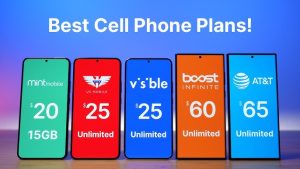
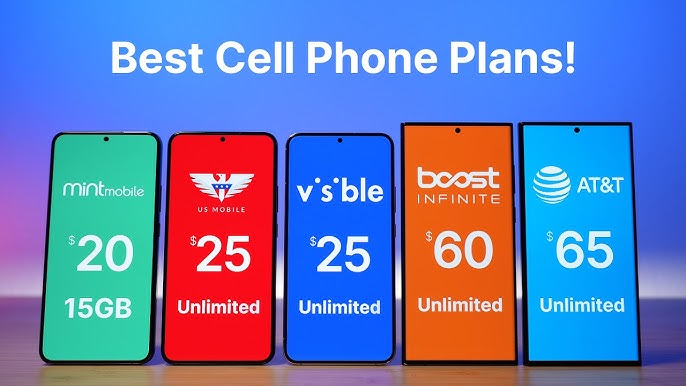
Examples include brands like Mint Mobile, Cricket Wireless, and others — but availability varies by market.
c. Prepaid Providers
Great for budget-minded users who want control and no contracts. However, they may offer basic features with limited extras.
6. How to Evaluate Coverage and Network Quality
Price and data don’t matter if you can’t get signal.
Here’s how to check coverage:
a. Look Up Coverage Maps
Before choosing a plan, check the carrier’s coverage map for your city and places you travel often.
b. Ask Others in Your Area
Personal experience from friends or neighbors can reveal real-world signal quality.
c. Read Reviews
Check online reviews for speed, dropped calls, and data reliability.
7. International Considerations
If you travel outside your home country often, consider:
a. Roaming Costs
Some plans include international roaming; others charge high fees.
b. International Calling
Unlimited or low-cost calling to select countries might be a deciding factor.
c. Travel Data Add-Ons
Some carriers allow short-term international data passes.
8. Special Plans: Seniors, Students, and Families
Many carriers offer specialized mobile plans tailored to specific groups:
a. Student Plans
Often cheaper data or streaming benefits.
b. Senior Plans
Simplified features and sometimes lower prices for light users.
c. Family Plans
Shared data pools and per-line discounts.
Evaluate whether these niche plans truly save money compared to general plans.
9. Hidden Costs and Fine Print to Watch Out For
Even good mobile plans may come with surprises:
🚫 Activation fees
🚫 Early termination fees (ETFs)
🚫 International roaming charges
🚫 Hotspot limits or extra fees
🚫 Deprioritization on shared networks
Take time to read the full terms and conditions before signing up.
10. How to Switch Plans Without Losing Your Number
If you’re switching carriers but want to keep your phone number:
-
Don’t cancel your old plan first.
-
Use the new carrier’s “port my number” process.
-
Have your account details ready (account number, PIN).
-
Wait for confirmation — it usually takes a few hours to a day.
Switching is easier than ever and often comes with incentives.
11. Tips for Saving Money on Mobile Plans
Here are some practical tips to reduce your phone bill:
a. Avoid Unlimited Data If You Don’t Need It
If you rarely exceed a modest data usage, a smaller plan might be cheaper.
b. Use Wi-Fi Wherever Possible
Streaming on Wi-Fi reduces mobile data use dramatically.
c. Remove Unused Add-Ons
If services like insurance, extra hotspot data, or streaming subscriptions are unused, drop them.
d. Annual or Prepaid Discounts
Some providers offer savings if you pay yearly or prepay several months.
e. Compare Regularly
Your needs may change — check plans annually.
12. Future Trends in Mobile Plans
Mobile plans are evolving:
-
More 5G plans
-
eSIM and digital-first carriers
-
Data sharing and rollover
-
More bundled perks (TV, music, gaming)
Staying informed helps you choose a plan that’s future-friendly.
13. Choosing the Best Plan: Step-by-Step Checklist
Track your current data usage
Determine your priority (data, cost, perks)
Compare carriers based on coverage and price
Check hidden fees and terms
Evaluate special discounts or promotions
Make your choice and switch if needed
14. Common Myths About Mobile Plans
Let’s debunk a few:
❌ Unlimited plans always offer best value — Not true if you don’t use all that data.
❌ Cheaper MVNO = poor service — Many MVNOs use the same networks as big carriers.
❌ Switching carriers is complicated — It’s usually straightforward with number porting.
15. Conclusion: Make the Plan Work for You
Choosing the best mobile plan comes down to understanding your usage, comparing options carefully, and balancing cost with convenience. While marketing makes plans seem overwhelming, breaking the decision into clear steps — like evaluating data needs, coverage quality, pricing, and perks — simplifies the process.
Mobile plans are personal: what’s perfect for someone else might be overkill for you — and that’s okay! The right plan keeps you connected without draining your wallet.
If you want, I can also create a comparison table of mobile plan examples, tailor a recommendation based on your specific usage habits, or help you find plans available in your region! Just let me know 🧡📱 more