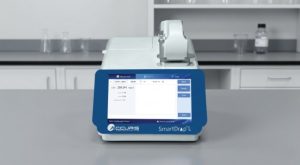

laboratory spectrophotometer
So you’ve got a spectrophotometer for the laboratory, but you’re not totally sure how to get the best results out of it. Don’t worry. This is one of those pieces of equipment that looks intimidating at first but makes a lot of sense once you understand what it’s actually doing.
Let’s break it all down in a way that actually sticks.
What Is a Spectrophotometer and What Does It Do?
Before jumping into the best practices for using a laboratory spectrophotometer, you need to know what this machine is actually doing. A spectrophotometer measures how much light a liquid sample absorbs. That’s the core of it.
Let’s say you shine a flashlight through a glass of colored juice. The darker the juice, the less light gets through. A spectrophotometer does the same thing, but with extreme precision and specific wavelengths of light. The result tells you how much of a particular substance is present in your sample.
Labs use this for everything from measuring protein concentration to checking water quality to running blood chemistry tests.
The Right Ways to Operate a Laboratory Spectrophotometer
Warm Up the Machine Before You Do Anything
This is the step most people skip, and it causes so many problems. A laboratory spectrophotometer needs time to stabilize after you turn it on. The light source inside, usually a tungsten or deuterium lamp, needs to reach a consistent output before your readings will be accurate.
Give the machine at least 15 to 30 minutes to warm up before you start taking measurements. You wouldn’t start cooking on a cold pan and expect perfect results. Same idea here.
Always Use the Right Cuvette
A cuvette is the small container that holds your sample inside the machine. You’d think any small transparent container would work. It doesn’t.
Different cuvettes are made for different wavelengths of light. Glass cuvettes work for visible light but block UV light. Quartz cuvettes work for both. Plastic cuvettes are fine for quick tests but scratch easily and introduce errors over time.
Match your cuvette to your wavelength. Also, always handle cuvettes by the top or frosted sides. Your fingerprints on the clear surface scatter light and throw off the reading. It sounds minor, but it makes a real difference.
Blank Your Machine Every Single Time
Blanking, also called zeroing, is the process of setting your baseline. You fill the cuvette with your dissolving solution, usually distilled water or a buffer, and tell the machine this is your zero point.
Every measurement after that is relative to this blank. Skip it, and your readings are comparing your sample against nothing consistent.
A simple way to think about it: when you weigh ingredients in a bowl, you press the tare button to zero out the bowl’s weight first. Blanking your spectrophotometer is exactly that. Always re-blank if you change wavelengths or switch sample types.
Keep Your Cuvettes Clean
A dirty cuvette is one of the most common reasons for inconsistent results. Even a thin film of residue from a previous sample can alter your readings noticeably.
Rinse your cuvette with distilled water between samples. For stubborn residue, use mild detergent and rinse thoroughly. Never use rough brushes inside the cuvette because scratches permanently damage the optical surface, and your readings will never be the same again.
Select the Correct Wavelength
Every substance absorbs light most strongly at a specific wavelength. Running your test at the wrong wavelength is like trying to hear a whisper in a noisy room. You’ll get a reading, but it won’t be reliable.
Most lab protocols will tell you exactly which wavelength to use. If you’re developing your own method, run a wavelength scan first to find the peak absorption point for your specific substance.
Stay Within the Linear Range
Spectrophotometers work accurately only within a certain absorbance range, usually between 0.1 and 1.0. This is called the linear range.
If your sample is too concentrated, your reading falls outside this range and becomes unreliable. Think of a scale that only measures up to 10 kilograms accurately. Put something heavier on it, and the number means nothing.
If your absorbance reads above 1.0, dilute your sample and re-test. Always note your dilution factor so you can calculate back to the true concentration.
Run a Standard Curve for Quantitative Work
A standard curve is a set of samples with known concentrations that you measure before testing your unknowns. You plot those known values and use that line to figure out the concentration of your actual samples.
Without a standard curve, you’re guessing. With one, you’re measuring with real confidence. Run a fresh standard curve every time you start a new batch. Don’t rely on data from last week. Log Everything and Maintain the Machine
Good lab practice means writing down what you did. Record the wavelength, the blank reading, the date, and who ran the test. When a result looks off later, your notes are what help you figure out where things went wrong.
Also, check your lamp hours regularly and replace it before it burns out mid-experiment. A spectrophotometer that isn’t maintained gives you results that slowly get worse without any obvious warning sign.
The Bottom Line
Operating a spectrophotometer well comes down to consistency. Warm it up, use the right cuvette, blank correctly, stay in the linear range, and keep everything clean. Do those things every single time, and your results will be something you can actually trust. more