lifeguard training near me
Lifeguard training is one of the most important steps toward building a career in aquatic safety and emergency response. Lifeguards are responsible for protecting swimmers, preventing accidents, and responding quickly during emergencies at pools, beaches, waterparks, resorts, and waterfront facilities.
Every year, thousands of people search online for terms such as “lifeguard training near me,” “best lifeguard training course,” and “how to become a lifeguard” because they want to gain life-saving skills while pursuing flexible and rewarding career opportunities.
Professional lifeguard training programs are designed to prepare individuals for real-world emergencies through hands-on rescue practice, CPR instruction, first aid education, and surveillance training. Organizations such as the American Red Cross and the American Lifeguard Association provide recognized certification programs that meet professional aquatic safety standards.
What Is Lifeguard Training?
Lifeguard training is a professional certification course that teaches participants how to supervise aquatic environments and respond effectively during emergencies.
Training programs combine:
- Water rescue techniques
- CPR and AED certification
- First aid instruction
- Surveillance methods
- Communication skills
- Emergency response drills
- Risk prevention strategies
The goal of lifeguard training is to prepare individuals to identify hazards quickly, prevent dangerous situations, and respond confidently when emergencies occur.
Lifeguards commonly work at:
- Community swimming pools
- Beaches
- Waterparks
- Resorts
- Lakes and rivers
- Fitness centers
- Summer camps
Why Lifeguard Training Is Important
Water emergencies can happen unexpectedly, even in supervised environments. Certified lifeguards are trained to recognize danger signs early and take immediate action before situations become life-threatening.
For example, during a busy summer afternoon at a public pool, a swimmer may silently struggle underwater while nearby guests remain unaware of the danger. A trained lifeguard quickly recognizes the distress signs, activates emergency procedures, performs a rescue, and begins emergency care within seconds.
This level of preparedness comes from professional lifeguard training and repeated practical exercises.
Lifeguard training helps individuals develop:
- Emergency response skills
- Leadership abilities
- Confidence under pressure
- Communication techniques
- Team coordination
- Physical endurance
These skills are essential for protecting lives in aquatic environments.
Core Skills Learned During Lifeguard Training
Water Rescue Techniques
Water rescue skills form the foundation of every lifeguard training program.
Reaching Assists
Participants learn non-contact rescue techniques using:
- Rescue poles
- Towels
- Rescue tubes
- Reaching devices
These methods help distressed swimmers while reducing danger for rescuers.
Throwing Assists
Throwing assists involve using flotation equipment to help swimmers in distress.
Training includes practice with:
- Ring buoys
- Throw ropes
- Rescue bags
Students learn proper throwing accuracy and verbal communication during rescue situations.
Active Victim Rescues
An active victim is conscious and struggling in the water.
Lifeguards learn how to:
- Approach safely
- Control panicked swimmers
- Use rescue equipment correctly
- Return victims safely to shore or poolside
Hands-on rescue drills help improve reaction speed and confidence.
Passive Victim Rescues
Passive victims are unconscious or unable to move independently.
Training includes:
- Surface dives
- Underwater retrieval techniques
- Emergency extraction procedures
- Team rescue coordination
These scenarios prepare lifeguards for serious aquatic emergencies.
Spinal Injury Management
Spinal injuries can occur during diving accidents or water collisions.
Participants learn:
- In-water stabilization
- Backboarding procedures
- Head and neck support
- Coordinated extractions
Proper spinal management helps reduce the risk of further injury.
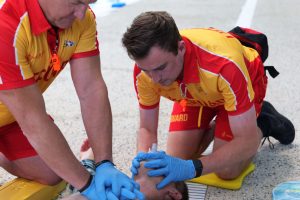
CPR and AED Certification
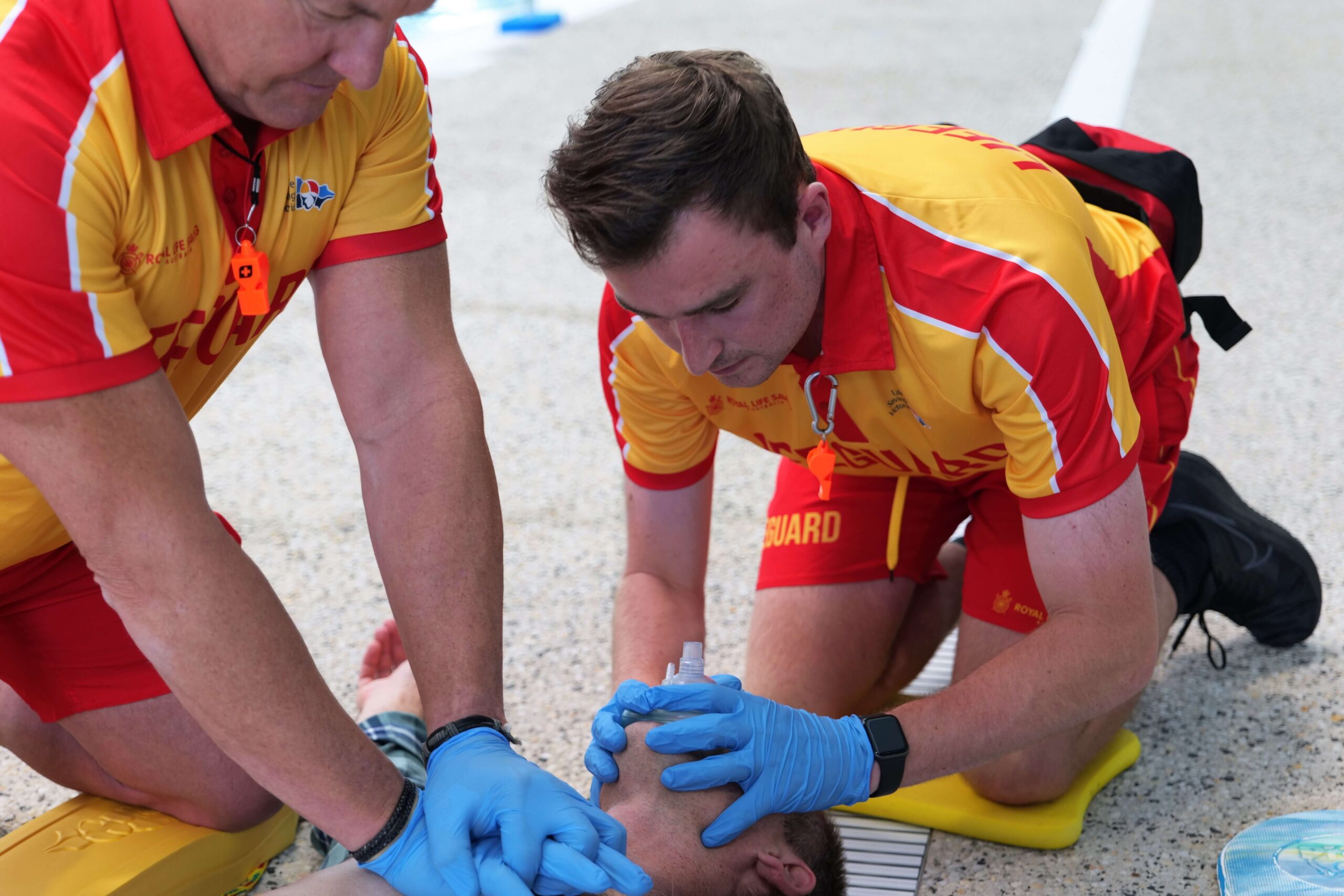
One of the most valuable parts of lifeguard training is CPR and AED certification.
Adult CPR
Students practice:
- Chest compressions
- Rescue breathing
- Airway management
- Cardiac emergency response
Repeated training helps participants maintain proper rhythm and compression depth.
Child CPR
Children require modified CPR procedures due to their size and physical development.
Training includes:
- Child-specific compressions
- Pediatric rescue breathing
- Emergency assessment techniques
Infant CPR
Infant emergencies require careful and precise treatment.
Students learn:
- Infant airway positioning
- Gentle chest compressions
- Infant choking response procedures
Hands-on practice improves confidence during pediatric emergencies.
AED Training
Automated External Defibrillators (AEDs) are critical during cardiac arrest emergencies.
Lifeguards learn how to:
- Operate AED devices safely
- Apply pads correctly
- Coordinate CPR with AED use
- Follow emergency prompts efficiently
Fast AED response can significantly improve survival outcomes.
First Aid Skills Included in Lifeguard Training
Lifeguards are often the first responders during injuries and medical emergencies.
Wound Care and Bandaging
Training covers treatment for:
- Cuts
- Scrapes
- Bruises
- Minor bleeding injuries
Students learn how to clean wounds properly and apply bandages safely.
Heat Exhaustion and Heat Stroke
Outdoor aquatic facilities expose swimmers to high temperatures.
Participants learn how to identify symptoms such as:
- Dizziness
- Weakness
- Dehydration
- Confusion
Quick treatment can prevent serious medical complications.
Hypothermia Recognition
Cold-water emergencies can quickly become dangerous.
Training includes:
- Identifying warning signs
- Safe warming procedures
- Monitoring breathing and consciousness
Surveillance and Prevention Skills
Prevention is one of the most important responsibilities of a certified lifeguard.
Effective Scanning Techniques
Professional lifeguards use structured scanning methods to monitor swimmers continuously.
Good scanning habits include:
- Watching assigned zones carefully
- Avoiding distractions
- Recognizing unusual swimmer behavior
- Identifying emergencies early
Experienced instructors explain that drowning is often silent, making observation skills extremely important.
Hazard Recognition
Students learn how to identify dangerous conditions such as:
- Slippery pool decks
- Broken equipment
- Unsafe weather conditions
- Strong currents
- Poor water visibility
Recognizing hazards early helps prevent accidents before they happen.
Rule Enforcement
Lifeguards help maintain safety by enforcing facility rules professionally.
Common aquatic rules include:
- No running
- No diving in shallow areas
- No rough play
- Child supervision requirements
Training teaches students how to communicate rules respectfully and effectively.
Communication and Teamwork During Emergencies
Lifeguards often work together during rescue situations.
Whistles and Hand Signals
Students learn standardized emergency signals used for:
- Activating emergency action plans
- Coordinating rescues
- Alerting staff
- Managing crowds
Fast communication improves emergency response efficiency.
Working With Emergency Responders
Lifeguards may coordinate with:
- EMS personnel
- Fire departments
- Police officers
Strong communication helps emergency teams work effectively together.
Team Rescue Simulations
Most lifeguard training programs include realistic rescue drills involving:
- Multiple victims
- Spinal injury emergencies
- Crowded aquatic facilities
- Emergency evacuations
These simulations strengthen teamwork and leadership abilities.
Types of Lifeguard Training Programs
Different aquatic environments require specialized training.
Pool Lifeguard Training
Pool lifeguards commonly work at:
- Community pools
- Hotels
- Fitness centers
- Waterparks
This certification is ideal for beginners entering aquatic safety careers.
Waterfront Lifeguard Training
Waterfront lifeguards supervise:
- Lakes
- Rivers
- Summer camps
- Open-water recreation areas
Training focuses on larger rescue zones and reduced visibility conditions.
Surf Lifeguard Training
Surf lifeguards work in demanding ocean environments.
Training may include:
- Rip current rescues
- Surf swimming
- Paddle rescues
- Ocean hazard management
This certification requires advanced physical conditioning.
What to Expect During Lifeguard Training
Course Duration
Most lifeguard training programs last several days or weeks depending on certification type and provider.
Programs generally include:
- Classroom instruction
- Rescue practice
- CPR training
- Written examinations
- Physical skills testing
Physical Requirements
Participants may need to:
- Swim long distances
- Tread water continuously
- Retrieve weighted objects
- Complete timed rescue scenarios
Preparing physically before training improves performance and confidence.
Mental Preparation
Lifeguards must remain calm during stressful emergencies.
Training simulations help students develop:
- Decision-making abilities
- Leadership skills
- Emergency confidence
- Problem-solving techniques
These qualities are essential during real rescue situations.
Benefits of Lifeguard Training
Strong Career Opportunities
Certified lifeguards are needed at:
- Beaches
- Resorts
- Waterparks
- Community pools
- Cruise ships
- Summer camps
Searching for “pool lifeguard jobs” often reveals flexible employment opportunities.
Valuable Life Skills
Lifeguard training helps students develop:
- Leadership
- Communication
- Teamwork
- Responsibility
- Emergency preparedness
These skills are valuable in many professional environments.
Helping the Community
Lifeguards help create safer aquatic environments and directly protect lives every day.
Flexible Scheduling and Competitive Pay
Many lifeguard positions offer:
- Seasonal employment
- Weekend shifts
- Part-time schedules
- Competitive hourly wages
This flexibility makes lifeguarding attractive to students and active professionals.
How to Choose the Best Lifeguard Training Program
When searching for the “best lifeguard training,” consider the following factors.
Accreditation and Recognition
Choose programs associated with recognized organizations such as:
- American Red Cross
- American Lifeguard Association
These certifications are widely accepted by employers.
Experienced Instructors
Qualified instructors should have:
- Professional certifications
- Rescue experience
- Teaching expertise
- Current emergency response training
Strong instructors improve the quality of learning significantly.
Modern Facilities and Equipment
High-quality training providers offer:
- CPR mannequins
- AED trainers
- Rescue equipment
- Safe aquatic facilities
Hands-on practice is essential for building confidence and practical skill.
Maintaining Lifeguard Certification
Lifeguard certifications require regular renewal to maintain current knowledge and emergency response abilities.
Lifeguard Recertification
Recertification programs review:
- CPR procedures
- Rescue techniques
- Emergency response updates
- Current safety standards
Regular training helps lifeguards remain prepared for real-world emergencies.
Conclusion
Lifeguard training provides the practical skills, emergency response knowledge, and confidence needed to protect lives in aquatic environments. Through rescue practice, CPR instruction, first aid education, and prevention strategies, students become prepared to respond effectively during emergencies while maintaining safer swimming environments.
Whether you want to work at a pool, beach, resort, or waterpark, completing professional lifeguard training can open the door to rewarding career opportunities while helping you make a meaningful impact in your community.
If you are ready to develop life-saving skills and begin a career focused on aquatic safety, enrolling in a professional lifeguard training program is an excellent first step.
Author Bio
Daniel Harper is a certified aquatic safety instructor with over 12 years of experience in lifeguard education, emergency preparedness, and water rescue training. He has trained hundreds of lifeguards in CPR, AED operation, surveillance techniques, and advanced rescue skills while promoting safer aquatic environments for communities and recreational facilities. more